Wednesday, September 30, 2015

Surprise!


You thought the guillotine is ancient French history, right?

Well, here’s a shocker:


The guillotine was the legal method of execution in France until 1981, when capital punishment was abolished.

The iconic terror of the French Revolution was last used in 1977 to behead a murderer named Hamida Djandoubi.


Copyright © Richard Carl Subber 2015 All rights reserved.

Sunday, August 30, 2015

When safety tests were more interesting....

In 1912, testing the ruggedness and protective features of a football helmet was a fairly straightforward process:

1912 product safety test

Find someone who knew how to simulate diving through the defensive line, strap the helmet on him and do the test.

William "Pudge" Heffelfinger
Football already was starting to hit the big time in 1912. You might say that professional football got started on November 12, 1892, when the Allegheny Athletic Association paid William “Pudge” Heffelfinger $500 under the table to help the AAA team beat the Pittsburgh Athletic Club, 4-0 (touchdowns were worth 4 points at that time). Nobody worried too much about head or brain injuries back then.

The thing that bothers me most about the safety test picture is that the three safety consultants appear to be enjoying themselves a bit overmuch. Of course, they didn’t have TV back then.


Wednesday, August 26, 2015

Guacamole is an Aztec word


Long before Jamestown, long before the Roanoke Colony (“Lost Colony”), long before the first English attempts to gain a foothold in the Americas, Spanish explorers and adventurers were hard at work trying to plant the royal flag of Spain in Central America and South America.

On August 13, 1521, Hernán Cortés and his small force captured Tenochtitlán, the capital of the Aztec empire, on the site of present-day Mexico City. This conquest marked the downfall of the Aztecs’ far-flung domain, as Cortés became the de facto ruler.

Before the fall of their capital, the Aztecs’ empire embraced almost 500 small “states” with a population of 5-6 million people. At the pinnacle of Aztec power, the capital city had more than 140,000 inhabitants and was the most densely urban city that ever existed in Mesoamerica.


Disease played a role in the transition of power, as it did later in the conflict of European settlers and Native Americans in North America. An outbreak of smallpox among the Aztecs in 1520 substantially weakened their ability to resist the Spanish conquistadors. Almost 250,000 Aztecs died in the fighting for Tenochtitlán.

By 1530, the Spanish conquerors had renamed the Aztecs’ domain and called it “New Spain.”

The Aztecs had an advanced culture, including sophisticated science and highly developed commerce and arts. Familiar words in our modern conversations can be traced to Nahuatl, the language of the Aztecs: these include avocado, chocolate, coyote and guacamole.


Copyright © Richard Carl Subber 2015 All rights reserved.

Saturday, August 22, 2015

No surprise here


Making profits and the foibles of human nature don’t seem to have any trouble co-existing, and they have done so for a long time.

I came across this somewhat incidental observation in a book on the history of clocks and timekeeping:

“This maritime struggle was linked to commercial rivalry. For both countries the eighteenth century was a period of rapid growth of trade and competition in what were known as colonial wares: sugar, coffee, tea, tobacco—what I like to call Europe’s ‘big fix.’ “  


The author, David Landes, was referring to the long-running naval policy and tactical conflicts between England and France.

The thing that struck me is: all four of those “colonial wares” are addictive commodities. There wasn’t any difficulty about selling the stuff. The rivalry was all about who would transport it from the colonies to Europe, and who would cash in when it was finally sold to the end users.

Eighteenth century mercantilism had many dimensions, and this was one of them.


Source:
David Landes, Revolution in Time: Clocks and the Making of the Modern World (Cambridge, MA: The Belknap Press of Harvard University Press, 1983), 159.


Copyright © Richard Carl Subber 2015 All rights reserved.

Tuesday, August 18, 2015

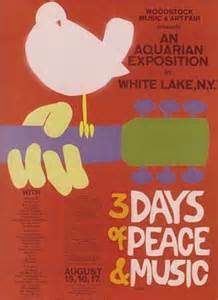
Woodstock: that was a music thing, right?


The pleasure palace at Woodstock opened 46 years ago on August 15, 1969.


Wasn’t there. Didn’t do that. Maybe you did. So, you can have my share of the memories.

As it happened, I was at Fort Benning near Columbus, GA, doing officers’ infantry basic training.
Not saying that was a better way to spend some summer days in August. One thing: seems like we probably had better weather in Georgia, the Woodstockers got rain several times.

Of course, no one is surprised whenever I mention (at least four times in the last 46 years) that I didn’t go to Woodstock. Even if I hadn’t been on active duty, I wouldn’t have gone.


Wasn’t my thing.

But it was a big thing.

Woo hoo.


Friday, August 14, 2015

Science ruins everything


The world and universe we live in is what it is, although some folks insist on their right to believe otherwise.

Let’s be straight here: for example, believing that the earth was made in six days doesn’t make it so.


The reference to 1543 calls to mind the work of Nicolaus Copernicus, a Polish mathematician and astronomer of the Renaissance who startled the Western world by publishing his evidence (De revolutionibus orbium coelestium) of a heliocentric solar system—sun at the center, planets revolving around it. It took a while for that to sink in.


Full disclosure: Copernicus had nothing to say about Santa Claus.


Copyright © Richard Carl Subber 2015 All rights reserved.

Monday, August 10, 2015

Same old, same old

Politicians and representative government have been around for a long time in the United States.

The first legislative assembly in the North American colonies was called to order on July 30, 1619 in Jamestown in the Colony of Virginia, with the professed intention of providing “just laws for the happy guiding and governing of the people there inhabiting.”

The Virginia House of Burgesses had 22 members elected initially by the free adult English males in the colony’s 11 boroughs. Soon after the first election Polish and Slovak artisans in the colony were given the franchise.

The first law set the official minimum price of tobacco at three shillings per pound. In the burgesses’ first six-day session, they passed laws prohibiting gambling, drunkenness and “idleness,” and also approved a bill that established mandatory observance of the Sabbath.

Does any of this sound familiar?

Legislation that arbitrarily regulated the price of an important commodity (think “milk”).

Bills aimed at preventing some people from doing some things that are obviously suited to our human nature but don’t measure up to the moral/religious standards of some other people (think “medical or recreational marijuana”).

A law to require everyone to conform with the religious scruples of the dominant group in the community (think “abortion restrictions”).

The Burgesses didn’t have to be concerned with raising gas taxes to fund transportation infrastructure repairs, or the ravages of global climate change, or squabbling about the national debt and “shutting down the government.”

That first legislative assembly got the job done in six days.

Arbitrary, short-sighted, ideologically constrained government was an easier gig in 1619.


Copyright © Richard Carl Subber 2015 All rights reserved.

Thursday, August 6, 2015

Miep Gies saved Anne Frank's diary

Annelies Marie "Anne" Frank

On August 4, 1944, Anne Frank and her family were arrested by the Gestapo in Amsterdam and sent to their deaths in German concentration camps. Only her father, Otto, survived.

No one knows the name of the Dutch informer who revealed the Franks’ hiding place.

Few people know the name of the brave woman who helped hide and shelter the family before they were captured, and who saved Anne’s heartbreaking diary.

Miep Gies before WWII
Miep Gies (1909-2010)) was one of many stalwart Dutch resisters who hid Jews during World War II in the Netherlands. She was born Hermine Santruschitz in Austria. As a child, she adopted the surname of her foster family in Amsterdam. With her husband and three others who protected Anne and her family, Miep worked for Otto’s father in the building where the Franks hid from July 1942 to August 1944. After the Gestapo raid, she found the 15-year-old girl’s diary in the ransacked rooms where the family had desperately survived.

Miep kept the diary—but never read it—and gave it to Otto when he made his way back to Amsterdam after the war ended.

Here’s a chilling note: Anne had innocently written in her diary the names of all the resisters who concealed and fed her family for so many months. After it was published, Miep told Otto that if she had read the diary after Anne disappeared, she would have destroyed it to protect herself and the other Samaritans of No. 263 Prinsengracht in Amsterdam.


Miep Gies was a brave and wonderful woman. If she had been a curious lady, Anne Frank’s name would have died with her at Bergen-Belsen in early 1945.


The only known video of Anne Frank, as a young girl looking out a second-floor window at the wedding of a neighbor in 1941see it here
  

Sunday, August 2, 2015

Masters of war, revisited


World War I got started in earnest 101 years ago, when Russia and Germany declared a mutual state of war on August 1, 1914. France piled on a couple days later, and Britain did the same within hours.

The textbooks say that WWI was provoked a month earlier by the assassination of Archduke Ferdinand, heir to the Austro-Hungarian Empire, on June 28. The shots fired by a Bosnian Serb nationalist led to 20 million military and civilian deaths.

A more accurate understanding of the origins of the war—and any war—must include a recognition that the effective causes of war are the many, sometime independent and sometimes overlapping, incremental acts and plans of individuals and governments that finally make conflict seem “inevitable.”

The European powers, including Russia, had been jockeying for years for economic power and political hegemony or dominance on the continent. Britain and Germany had been openly competing for naval superiority on the seas and coastal waterways. The 19th century monarchical and dynastic powers were struggling to retain power in an increasingly hostile international environment.

The brutal fact is that the European powers had been preparing for war for a long time. It really wasn’t a great big surprise in the summer of 1914 when it started.

The bitter truth is that many leaders, and many of the men and women who would become cannon fodder, welcomed the advent of World War I.


The frightening reality is that human nature hasn’t changed in the last 100 years.


Copyright © Richard Carl Subber 2015 All rights reserved.

Wednesday, July 29, 2015

The Canadians are coming!


Well, not really, but almost 100 years ago American military planners weren’t so sure.

You may have heard or learned in school that Canada is the only country for which the United States doesn’t have a standby war plan in case hostilities become imminent.

In the 1920s the Canadian military feared that their country might become a battleground if Britain and the United States were to escalate their competition for dominance around the world. So, as explained in a Boston Globe book review, the Canadians developed a plan to preemptively invade and conduct a holding operation to give British troops time to come over and pile on.


On our side, military planners cooked up “War Plan Red” (yeah, they did pick snazzy code names back then) to stop Canadian invaders in their tracks.

World War II got started a short time later and the Canadians and British and Americans found themselves on the same side and the war plans were ultimately pigeonholed.


Now, let’s be frank: today Canada has the world’s third-largest petroleum reserves and it has 20% of the planet’s fresh water supply. Not insignificant treasure.

Still, I don’t think any Americans are going to be heading to Toronto in a troop carrier any time soon.


Copyright © Richard Carl Subber 2015 All rights reserved.

Saturday, July 25, 2015

Book reviewing, the dubious career path….


Book reviewing never has been the noblest profession.

The art of the book review is relatively young. Edgar Allan Poe wrote some reviews for Graham’s Magazine in the 1840s. The first explicitly titled book review appeared in 1861—it was a sweetheart review, in the awkwardly reserved language of the era:

“The present work has the additional recommendation of an unmistakably useful subject…”

An interesting point is that no one thought there was a need for book reviews before the middle of the 19th century. The Junto: A Group Blog on Early American History says:

“By the 1840s, improved production techniques and faster distribution networks meant that middle-class readers in America could expect convenient access to a wide range of literary materials in a variety of formats. But they also meant that readers trained to prize discernment needed more sophisticated ways to evaluate the materials passing before their eyes. This was one of the requirements that led to early attempts to define an American national literary canon.”

Book reviewers haven’t been getting a lot of respect since the early days. Poe criticized book reviews in 1846:

"We place on paper without hesitation a tissue of flatteries, to which in society we could not give utterance, for our lives, without either blushing or laughing outright."

A century later, George Orwell had these unkind words for reviewers:

“In much more than nine cases out of ten the only objectively truthful criticism would be ‘This book is worthless’, while the truth about the reviewer’s own reaction would probably be “This book does not interest me in any way, and I would not write about it unless I were paid to.”

If you’re feeling the urge to be a full-time book reviewer, take a moment and think about medical school.


Copyright © Richard Carl Subber 2015 All rights reserved.

Monday, July 20, 2015

Bicycle what?


Sometimes we tend to think the ancients and so-called savages and sadly disadvantaged foreigners have strange medical practices, but we don’t have to look elsewhere for doctors gone bonkers….

Vox.com offers this little gem about a dark corner of late 19th century American medical care that flourished for a while when bicycling was a new fad and all the rage.

Doctors—almost exclusively male—took great pains to warn women that riding a bicycle could cause “bicycle face.” You know, bicycle face….

Here’s a quote from the Literary Digest in 1895: "Over-exertion, the upright position on the wheel, and the unconscious effort to maintain one's balance tend to produce a wearied and exhausted 'bicycle face . . .'"

And more: the “bicycle face” is “usually flushed, but sometimes pale, often with lips more or less drawn, and the beginning of dark shadows under the eyes, and always with an expression of weariness . . .characterized by a hard, clenched jaw and bulging eyes."


You know, bicycle face….

I guess maybe you had to be a doctor to recognize the symptoms….

And another thing: you have to wonder where women bought those exercise outfits….


Copyright © Richard Carl Subber 2015 All rights reserved.

Thursday, July 16, 2015

Plugging the meter….


The first parking meter was put into operation on July 16, 1935, in Oklahoma City, OK. It cost a nickel to park downtown for an hour on the southeast corner of First Street and Robinson Avenue.

Park-O-Meter No. 1


Finding a parking space was becoming a problem for motorists and shoppers. Nevertheless, some drivers fought the parking fee, calling it a “tax” without due process of law.

That gripe didn’t get any traction.

Within a half dozen years, there were 140,000 parking meters in America.

You know the rest of the story.


Copyright © Richard Carl Subber 2015 All rights reserved.

Sunday, July 12, 2015

Colonization: think of it as a bad idea….


Remember that white European impulse to establish colonies all over the world? It was the thing to do for several centuries, and it died hard.

Just for the record: the first two American soldiers were killed in South Vietnam 56 years ago, in July 1959, long before the Gulf of Tonkin incident, long before “escalation” began and long before some guys started burning their draft cards.

Maj. Dale Ruis and MSgt. Chester Oynand died at Bien Hoa in their Military Assistance Advisory Group (MAAG) compound during a guerrilla attack.

The MAAG had been set up in South Vietnam in November 1955, barely more than a year after the last French soldiers died in Vietnam at Dien Bien Phu.


Some folks in America thought it was a good idea at the time.


Copyright © Richard Carl Subber 2015 All rights reserved.


Wednesday, July 8, 2015

Trash, it turns out, is really old news


The first identifiable landfill was first used about 5,000 years ago on the island of Crete. I guess it was pretty much a run-of-the-mill landfill, except that probably no one knew exactly what to call it. 

There weren’t any bulldozers back then to cover up the mess, so I wonder if anyone had the courage to object to hauling trash and garbage to that particular spot and just dumping it there in a pile.

We still haven’t figured out a good solution for taking care of our trash, really, and in some parts of the world, like Japan and Europe, acceptable landfill sites are becoming filled to capacity. Guess what happens next—less acceptable landfill sites are going to be used, and then unacceptable landfill sites are going to be used.


The Atlantic magazine recently reported that about three-quarters of the stuff in the trash stream in America could be composted or recycled, but it isn’t. Most of it is being buried or burned.

The average American produces about 130 pounds of trash each month.

Those Cretans who started piling up their trash 5,000 years ago got us started on the wrong track.

We’re trashing the planet, and I think the trash thing is going to bite us soon, in a lot less than 5,000 years.


Copyright © Richard Carl Subber 2015 All rights reserved.

Friday, June 26, 2015

Seven kids?!?


Today’s mini-history lesson:

It was a whole lot harder to cut the pie after dinner 150 years ago.
In the mid-1800s, the average American family had seven children. I guess the youngest never got any new clothes until he or she decided to marry.

About 100 years ago, at the start of the 20th century, the average number of kids per family had dropped to a bit over three—by that time, folks had been moving off the farms and shifting to urban life for quite a few years.(1)

Right now the average family has less than two children. In fact, the fertility rate of American women overall has dropped below the biological “replacement rate” of about 2.1 kids.

Immigration is responsible for net population growth in the United States.
  
(1) Atul Gawande, Being Mortal: Medicine and What Matters in the End (New York: Metropolitan Books, Henry Holt and Company, 2014), 21.


Copyright © Richard Carl Subber 2015  All rights reserved.

Monday, June 22, 2015

The old gray Magna Charta, she ain’t what she used to be….


It’s 800 years old. It’s one of those famously revered things that really never did mean what lots of folks like to think it meant.

Many folks will admit that they’ve heard of the Magna Charta, the Great Charter “granted” by England’s King John to his barons in June 1215.

Nearly everyone doesn’t know diddly about what the document actually says, or what it actually meant in the hurly burly of English and European political power-plays in the latter stage of the Middle Ages.

There is ill-informed understanding that Magna Charta was the first written guarantee of the rights and privileges of people who were members of the royal family, like barons, churchmen and the yeomanry and peasantry of England.


For starters, the original version of Magna Charta was a non-starter. The English barons pooled their grievances and brought the king to bay at Runnymede, on the Thames River near London. King John (died October 1216) never honored it, and the barons who forced him to sign it notoriously didn’t do much to honor their commitments, either. It didn’t take very long for Pope Innocent III to annul the charter, and the First Barons’ War ensued. Subsequent English kings revived and revised Magna Charta—it was a work in progress for about 80 years, and was finally reissued in more or less final form by King Edward I in 1297.

Magna Charta doesn’t declare many of the noble precepts that have been attributed to it. It most certainly is not the foundation of modern concepts of democratic liberties for all the people.
Magna Charta was a grudging compromise among powerful men who could be called rich thugs without too much exaggeration. The barons intended that it would secure their “rights and privileges.” It may well be true that the average English peasant or working guy didn’t hear about it for generations after it was signed.


By the way, here's a link to an English translation of the original Latin text. Give it a try. You’ll see that it’s not a clarion call for democracy.,


Copyright © Richard Carl Subber 2015 All rights reserved.

Wednesday, June 17, 2015

Only 40 hours!


Almost 90 years ago, the Ford Motor Co. became the first high-profile company to offer its assembly workers a five-day, 40-hour workweek in May 1926. A few months later, the unprecedented work schedule was extended to Ford’s white collar workers.


Henry Ford previously had shocked his big business peers by nearly doubling his assembly workers’ pay to $5 for an eight-hour day in 1914.

Before 1926, a six-day work week had been common throughout America. In the middle of the 19th century, American manufacturing workers put in about 65 hours a week, and the average workweek had dropped a bit to 60 hours by the end of that century. The number of hours on the clock dropped significantly in the first several decades of the 20th century.

The five-day workweek didn’t become standard until 1940, when provisions of the 1938 Fair Labor Standards Act were implemented.

Let’s note for the record that cellphones did not exist in the early 20th century, so those workers more or less actually did have two weekend days off from their labors.

Edsel Ford, the son of Henry Ford and president of Ford Motor Co. in the 1920s, explained the rationale for the five-day workweek: “Every man needs more than one day a week for rest and recreation….The Ford Company always has sought to promote [an] ideal home life for its employees. We believe that in order to live properly every man should have more time to spend with his family.”

Amen to that.


Copyright © Richard Carl Subber 2015 All rights reserved.
Saturday, June 13, 2015

Change is hard


A lot of folks didn’t know what to do with the new “rock and roll” music in the mid-1950s.

Some folks in Santa Cruz, California, thought they darn sure did know what to do about it.

On June 3, 1956, city officials decreed a complete ban on “rock-and-roll and other forms of frenzied music” at all public gatherings, and justified it because the music was “detrimental to both the health and morals of our youth and community.”

Seems that a couple hundred teens in the Santa Cruz Civic Auditorium had been swingin’ and swayin’ to the music of Chuck Higgins and His Orchestra. Santa Cruz police arrived about midnight to check things out, and Lt. Richard Overton reported the crowd was “engaged in suggestive, stimulating and tantalizing motions induced by the provocative rhythms of an all-negro band.” Of course, the cops shut the gig down and sent everyone home.

What starts out here as a great reason to get snarky—about the older generation that just didn’t get it—quickly turns into an ugly example of completely transparent racism.

Mr.Kesey
The cops and the city fathers must have been choking on their Cheerios 10 years later when Santa Cruz was a high-profile nexus of the West Coast counterculture scene. For goodness sakes, Ken Kesey and the Merry Pranksters hung out there.

The Merry Pranksters
And I guess a few more all-negro bands showed up, too.

Like, drug-infused hootenanny, y’know?

I’m guessing that Lt. Overton figured out that change is hard.


Copyright © Richard Carl Subber 2015 All rights reserved.