Tuesday, March 31, 2015

When were the good old days, exactly?


President Herbert Hoover didn’t have his own email server. Obviously.

Also, he didn’t have a telephone at his desk when he took office on March 4, 1929.

Hoover was the first president to install a telephone in the Oval Office. Otherwise, he would have had to use the phone in the lobby just outside it.

A few weeks after Hoover began his term, an initially pesky instrument was wired up on his desk. At first, it wouldn’t work properly, but the White House crew put it right.


Let’s be fair: a telephone system and switchboard was installed in the White House in 1878, only two years after Alexander Graham Bell received his patent. However, the telegraph system was the dominant communications channel at that time.

The telegraph stayed in the No. 1 spot in the U. S. through the end of the 19th century—in 1900, almost all of the telephone traffic in America was confined to strictly local calls. The long-distance telephone network became a 20th century phenomenon.


Copyright © Richard Carl Subber 2015

Sunday, March 22, 2015

When “the poorhouse” was a place….


Before the middle of the 20th century, “the poorhouse” wasn’t an abstract concept.

Through the World War II era, mostly county governments in the U. S. provided much of the care for the indigent and elderly folks who could not afford medical care or couldn’t take care of themselves. 

The facilities—“poorhouses” or, in some areas, “poor farms”—were often marginal or wretched.


They were systematically closed by mid-century, in tandem with a massive, federally-sponsored buildout of hospitals after WWII. In 1954 the federal government started providing funds so hospitals could build separate custodial units for patients who needed an extended period of “recovery,” and people who couldn’t take care of themselves increasingly ended up in extended stays in the expanded hospital facilities. That was the beginning of modern nursing homes.(1)

In the present time, economic constraints in the hospital health care system are reducing a patient’s time in hospital, and steadily pushing the indigent, elderly, helpless and terminal people toward retirement homes, nursing homes, hospice care, private care or no care.


(1) Atul Gawande, Being Mortal: Medicine and What Matters in the End (New York: Metropolitan Books, Henry Holt and Company, 2014), 68-71.


Copyright © Richard Carl Subber 2015

Monday, March 16, 2015

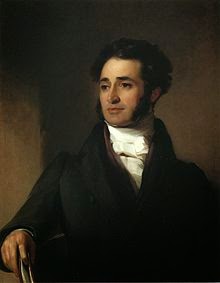
Jared Sparks, first American historian


We can think of Jared Sparks (1789-1866) as the first American historian.

Obviously he wasn’t the first person to write about American history. You may recall that Alexis de Tocqueville visited the United States in 1831-32 and then went home to France to write De la démocratie en Amérique (Democracy in America).


Sparks was the first American with public recognition as a scholar of American history. In 1838 he was selected as the McLean Professor of Ancient and Modern History at Harvard University, and he served in that post until 1849. He was the first academic historian doing original research, and did pioneering work in the collection of primary documentary materials. Sparks also served as president of Harvard during 1849-53.

The first history prof wrote The Life and Writings of George Washington (12 vols.) in 1834-37.


Copyright © Richard Carl Subber 2015
Wednesday, March 11, 2015

Have you “seen the elephant”?


Here’s one you probably don’t know:

Which came first, the Revolutionary War or the first elephant in America?

Think April 13, 1796.

That’s the day Capt. Jacob Crowninshield of Salem, MA, unloaded an Asian elephant from Calcutta in New York City. He sold it to a showman for $10,000 (almost $180,000 in current dollars).

President John Adams and crowds of Americans flocked to see “Old Bet,” a 2-year-old female who grandly toured throughout the United States for the next nine years. President Thomas Jefferson told Lewis and Clark to be on the lookout for “elephantine mammoths” as the hardy explorers were scouting new routes through the American West.

The exhibition of “Old Bet” was such a marvelous spectacle that folks who saw her talked about “seeing the elephant,” and even the folks who were waiting to see her—or missed the opportunity—helped to add those mundane words to the American lexicon. Later, Civil War soldiers added the darker dimension to the phrase as we know it today, when they guardedly recounted the grisly horror of combat with a sanitized acknowledgment that they had “seen the elephant.”


Elephants and circuses are as American as apple pie. Almost 100 years after “Old Bet,” P. T. Barnum did his fantastic best to promote “Jumbo,” a 12-foot-tall African elephant who weighed in at about 12,000 pounds.


Too bad that the Ringling Brothers and Barnum & Bailey Circus announced this week that the troupe of 13 elephants now appearing with its traveling shows will be retired in the next few years, and won’t be replaced.

When you were a kid, did you “see the elephant”? 

And, hey, did you get to do the elephant ride when the circus came to your town?


Copyright © Richard Carl Subber 2015

Friday, March 6, 2015

There’s no place like home….


Before 1950, most Americans died at home, from what were once familiarly described as “natural causes.”

By the 1980s, only about 1 out of 6 deaths occurred at home—most folks died in hospitals or nursing homes. The practice of medicine had expanded to embrace one’s last moments in an institutional setting, instead of the relative comfort of one’s own bed.


The trend toward dying in a hospital bed has reversed itself. Data from 2010 shows that about 45% of Americans departed this life in hospice care, and more than half of those folks received hospice care at home. These U. S. figures are among the highest in the world.

Dr. Atul Gawande writes in Being Mortal: “…our most cruel failure in how we treat the sick and the aged is the failure to recognize that they have priorities beyond merely being safe and living longer; that the chance to shape one’s story is essential to sustaining meaning in life; that we have the opportunity to refashion our institutions, our culture, and our conversations in ways that transform the possibilities for the last chapters of everyone’s lives.”

Dr. Gawande explores the often un-mentioned truth that simply “living as long as possible” isn’t the real wish of many people, and probably isn’t what most people really want.

“We’ve been wrong about what our job is in medicine. We think our job is to ensure health and survival. But really it is larger than that. It is to enable well-being. And well-being is about the reasons one wishes to be alive.” (1)

Most folks say that “quality of life” is most important at the end.

Read Being Mortal.

Take some time to think about what “quality of life” means to you.

Talk to your doctor and your loved ones about it.


 (1) Atul Gawande, Being Mortal: Medicine and What Matters in the End (New York: Metropolitan Books, Henry Holt and Company, 2014), 6, 193, 243, 259.


Copyright © Richard Carl Subber 2015

Tuesday, February 24, 2015

The art of Victor Hugo


“Aimons toujours ! Aimons encore !
 Quand l'amour s'en va, l'espoir fuit.
 L'amour, c'est le cri de l'aurore,
 L'amour c'est l'hymne de la nuit.”

Victor Marie Hugo (1802-1885)
French Romantic poet and writer

You know Victor Hugo:  Les Miserables, The Hunchback of Notre-Dame, Les Travailleurs de la Mer….

You might have forgotten that Hugo was the premier French Romantic poet of the early 19th century.

The lines above are the first quatrain of “Aimons toujours! Aimons encore!,” a wonderfully emotive love poem included in Les Contemplations, published in 1856.

My translation:
We love each other always! We love each other still!
When love is no more, hope flies.
Love, the herald of the dawn,
Love is the hymn of the night.


When was the last time you whispered to your beloved: “Love is the hymn of the night”?

Y’know, get Romantic and all….

Try it tonight.


Copyright © Richard Carl Subber 2015

Friday, February 20, 2015

Cultural authenticity....wha?

Diane Ravitch thinks we’re missing something in America, and I think she’s right.

Ravitch is an historian of education and a high profile expert on education policy.

She’s also an authentic, reflective thinker and commentator on the American scene.

Almost 25 years ago she edited The American Reader: Words That Moved A Nation, showcasing the span of American wordsmiths from Ben Franklin (Poor Richard’s Almanac) to Henry Wadsworth Longfellow (“Paul Revere’s Ride”) to Walt Whitman (“O Captain! My Captain!”) to Jacob Riis (The Battle with the Slum) to Margaret Sanger (“The Right to One’s Body”) to Woody Guthrie  (“This Land Is Your Land”) to Bob Dylan (“Blowin’ in the Wind”) to Ronald Reagan (Speech at Moscow State University).


In the first revision of American Reader in 2000, Ravitch confessed that she had cut some original content from the 1970s and 1980s because the pieces didn’t “…match the literary quality of the earlier selections and [didn’t] resonate in the national consciousness…”

She explained:
“It seems to me…that cultural authenticity is harder to find than in the past…songs were once shared by children, parents, grandparents and entire communities…The popular songs of recent years have short lives; they were written mainly for teenagers, with lyrics that are neither important nor memorable...I am unable to identify any contemporary poems that are known and loved by large numbers of ordinary Americans…With few exceptions, the political speeches of the recent past seem to me to be singularly devoid of lasting significance…Our presidents in the closing decades of the twentieth century were known more for their slogans, sound ‘bites,’ and off-the-cuff remarks than for the kinds of speeches that once spoke directly to the American public’s hopes and concerns and resonated in its collective memory.
“In this age of instantaneous mass communications, words do not seem to be as precious as they once were.”(1)

Ouch. The shoe fits…but, let’s be candid, it pinches quite a bit.


(1) Diane Ravitch, The American Reader: Words That Moved A Nation (New York: Perennial/HarperCollinsPublishers, 2000), xviii-xix.


History, memory....what really happened?

Thursday, February 12, 2015

The “first “ 13th Amendment


Ever hear of the “Corwin Amendment”?

I learned about it in an opinion piece by Jon Grinspan in this New York Times piece.

The so-called Corwin Amendment is a proposed constitutional amendment that would forever protect the right of states to legalize slavery. In fact, it was passed by Congress on March 2, 1861 (before the shooting started at Fort Sumter), with the approval of President Lincoln, and technically it’s still on the books, waiting for possible ratification by the states.

It would have been the 13th Amendment if two-thirds of the states had ratified it in the early 1860s.
The official 13th Amendment, finally ratified on December 6, 1865, abolished slavery and “involuntary servitude,” except as punishment for a crime.

The Corwin Amendment was sponsored by Rep. Thomas Corwin (OH) and Sen. William Seward (NY), who became Secretary of State as one of Lincoln’s “team of rivals.”

The proposed amendment stated:
“No amendment shall be made to the Constitution which will authorize or give to Congress the power to abolish or interfere, within any State, with the domestic institutions thereof, including that of persons held to labor or service by the laws of said State.”


In other words, it would have forever prohibited any amendment to the Constitution that would outlaw slavery.

The supporters of the Corwin Amendment hoped that it and other measures might forestall the impending outbreak of hostilities that became the bloody Civil War.

This historical dead-end reinforces my general view that, at least at the outset, the dynamics that created the Civil War were not primarily focused on “keeping or abolishing slavery,” I believe there was a complex dynamic of personal, commercial, state and sectional power issues (including the “peculiar institution” and the hotly disputed extension of slavery to new states) that fostered states’ rights talk, and secession, and the shooting war.

The proposal was approved by bare two-thirds majorities in both the House and the Senate—and note: seven states had already seceded, and the elected congressmen from those states did NOT vote on the amendment.

Wrong on so many levels.


Copyright © Richard Carl Subber 2015

Saturday, February 7, 2015

$135 per minute for long distance?


“Unlimited minutes” is what we like to hear these days.

Listen, hold that incoming call from your buddy in Hong Kong for a sec….

This month is the 100th anniversary of the first transcontinental phone call in the United States. Alexander Graham Bell—in New York City—called his long-time assistant, Thomas Watson—in San Francisco—over the new ATT&T line that ran 3,400 miles across the country.

“Ahoy! Ahoy! Mr. Watson, are you there? Do you hear me?”


Watson took the call, and history was made.

In 1915 folks had reason to tell themselves that the world was getting smaller. Little did they know….

The first commercial long-distance call was made on the evening of January 25—a fellow in San Francisco called his mom on the East Coast.

Now, of course, he didn’t have unlimited minutes. That call cost him about $7 a minute in 1915 dollars—roughly equivalent to about $135 per minute today.

“Hi Mom, it’s me, Bobby, guess where I am!”

p.s. in 1915 a coast-to-coast railroad trip lasted 90 hours—almost 4 days. 


Copyright © Richard Carl Subber 2015

Friday, January 30, 2015

The Hulk, Green Lantern, Obadiah Oldbuck….


Comic books are a staple of American literature. Haven’t you wished, at least once, that your cherished comic books of yore had been saved….?

As a matter of fact, kids (and parents) have been carelessly discarding those cherished comic books for almost 200 years.

OpenCulture.com provides the evidence, see it here.


Rudolphe Topffer of Switzerland is credited with publishing the first comic book (in Europe) in 1827—his masterpiece, The Adventures of Obadiah Oldbuck, was published in the U.S. in 1837.

Now, this one would not pass muster as a Marvel comic. In the early 19th century, such as Obadiah and his shenanigans were considered to be targeted to children and “the lower classes.” This marginally droll story may have been a hoot in 1837, but it seems a bit dry for modern taste. Also, no super powers.


Read The Adventures of Obadiah Oldbuck here.

Spoiler alert: Obadiah tries to kill himself a half dozen times, but he’s not good at it….


Copyright © Richard Carl Subber 2015

Thursday, January 22, 2015

Technically, he was elected....

At last, in the mid-1770s, the American colonists actually rebelled against their king and mother country. One of the reasons for the Revolution was most Americans’ persistent belief that they were Englishmen, entitled to all the historical rights of the king’s subjects.

Among these historical, sacred and hard-won rights was the right to vote for men who would represent them in Parliament. You know, “no taxation without representation,” and so on.

It’s too easy to forget that only a select class of men were entitled to vote. Ladies, forget it. Poor and landless folks, in general, forget it.


Case in point: in 1788-89, only 43,782 gents voted in the election that put George Washington in the president’s office of the newly independent American colonies. In other words, less than 2% of the non-slave population of the colonies (roughly 2.4 million free, 600,000 slave) went to the polls.


Another case in point: in 1774, the man who led Britain into war with the North American colonies was re-elected to Parliament by 18 men in the town of Banbury, Oxfordshire.

Frederick North, 2nd Earl of Guilford, was King George’s prime minister. Lord North’s Tory government decided to call an early parliamentary election in the summer of 1774, to catch their political opponents off guard—a regular election would have been required in spring of 1775.

North had undisputed control of his Banbury bailiwick, the site of his venerable family estate. Only 18 Banbury men had the bloodlines and legal standing to vote. The prime minister’s agent “assembled them for supper, with wine and cheese and a bowl of punch, and they duly elected Lord North.”(1)

Sometimes the same old story peeks from the pages of the history books….


(1) Nick BunkerAn Empire on the Edge (New York: Alfred A. Knopf, 2014), 322.


The Declaration was a re-write

Copyright © Richard Carl Subber 2015

Friday, January 16, 2015

“Liberty”?....what do you mean?


What did American colonists mean when they spoke of “liberty” and “independence”?

There are many dimensions of those words. In the context of today’s hyper, indulgent claims about the thoughts and opinions of the so-called “Founding Fathers,” I think it’s important to note that our current understanding of those two words is remarkably different from the way typical late 18th century colonists understood them.

For example:
“In the pre-revolutionary world of Washington and Lafayette, the notion of equality was almost literally unthinkable. Lafayette’s early opposition to slavery was as prescient as it was commendable, but neither he nor Washington considered slaves or Native Americans (or most other people) as even remotely their equals, whatever their stated principles. Distinctions of rank were implicit in the unspoken language of everyday life, imbedded too deep to be much remarked on even when they were pointedly felt, as they often were. Freedom, too, was a strange concept. In both the colonies and in France, the word ‘liberty’ usually referred to a traditional or newly granted privilege, such as an exemption from tax. Among the French aristocracy’s greatest complaints against Louis was the loss of such special considerations, or ‘liberties.’ The model of ‘independence’ that Washington held before him was that of the Virginia gentleman, whose property and wealth liberated him from the need to be dependent on anyone, even powerful friends. To declare one’s independence was to declare oneself an aristocrat.”


Neither “liberty” nor “independence” carried what we think of as familiar connotations within the modern liberal-conservative political spectrum. Indeed, in several respects, neither of those words was associated in colonial times with the ideologies, functions or practices of government.

The quote is from For Liberty and Glory: Washington, Lafayette and Their Revolutions, by James R. Gaines (New York: W. W. Norton & Company, 12-13).


Copyright © Richard Carl Subber 2015

Monday, January 12, 2015

Sheesh! It’s just a piano….


Some people have too much money.

One of the two pianos used in Bogie’s “Casablanca” masterpiece went under the auctioneer's gavel recently—for $3.4 million.

For that kind of dough, you have to figure the new owner is thrilled beyond all human understanding to know that there is an authentic wad of mummified chewing gum stuck to the bottom of the keyboard….maybe Bogie put it there….

It’s a nice looking upright piano and all.

I gladly assume the buyer accumulated his/her obvious wealth in completely legal ways, so he/she absolutely has the right to spend it any which way.

I’m just saying that, f’rinstance, $3.4 million would buy about 425,000 books for poor kids who don’t have even one book in their homes.

Just saying.


…and here’s another thought: suppose it wasn’t Bogie, suppose Dooley Wilson (“Sam” the piano player) stuck that gum there? Is the piano really worth $3.4 mil?


Copyright © Richard Carl Subber 2015

Thursday, January 8, 2015

The horses are gone, but....


I think it’s a good idea to reflect, every so often, on what life was really like in the past, especially the even slightly distant past that we may carelessly characterize as “the good old days.”

For instance, let’s talk about carbon monoxide, eternally spewing from the tailpipes of those infernal machines with internal combustion engines, and the accelerating destruction of our atmosphere, and global climate change and global warming and stuff….

Yeah, we can yearn for an earlier time when we weren’t cooking the planet.

Like 1900, before cars and trucks and airplanes were ubiquitous….


….when horses were everywhere, when it was superfluous to use the words “horse-drawn” when mentioning a carriage or wagon or trolley….

….when approximately 3 million horses were the transportation motive power in American cities….

….when all those horses were dropping 20-25 pounds of manure—each—every day….

….when the 15,000 nags in Rochester, NY, produced enough equine hockey pucks in a year to cover 
an acre of ground with a mountain of manure 175 feet deep….

….when everyone just stepped around or over the mounds of horse stuff, and nobody sued anybody about environmental impact statements and stuff….

Y’know, honestly, they just piled it up somewhere, that’s the way they took care of it.

‘Course, that’s the way we take care of a lot of our problems today.

Surprising as it may seem, most of the horses disappeared, but the horseshit is still with us.

See Jeff Jacoby's column in The Boston Sunday Globe, December 28, 2014

Check out this 1974 book by Otto Bettmann, The Good Old Days—They Were Terrible!


Copyright © Richard Carl Subber 2015

Saturday, January 3, 2015

The melting pot is real....


In some parts of the American South, about 1 out of 8 “white” people have at least one black ancestor.

We’ve always known that some black folks have a white granddad somewhere in the family tree.

Recently I read Clotel, or The President’s Daughter, by William Wells Brown. It’s reputed to be the first novel written by a black American. Brown, a former slave, published it in 1853.

In her foreword to the 1996 edition of Clotel, Dr. Joan Cashin notes: “Historians estimate that perhaps 10 percent of the four million slaves living in the South in 1860 had some white ancestry.”Brown extensively documented the well-known inclination of some white male slaveowners to rape their female slaves, and, with some regularity, produce mixed-race children.

We all know a little bit about dominant and recessive genes. Some children of black-and-white parents are very dark-skinned, and some are very light-skinned, and most are somewhere in between. The reality of “passing for white” has been known for centuries.


Now Vox.com has offered a modern, complementary factoid: “…in a lot of the South, about 10 percent of people who identified as white turned out to have African DNA…” Researchers writing recently in the American Journal of Human Genetics used DNA analysis to characterize the ancestry of folks who think of themselves as white.

In South Carolina and Louisiana, about 1 out of 8 self-identified “white” folks have DNA from African-American ancestors.

Detailed DNA analysis showed that the initial white/black unions “…generally occurred in the early 1800s…”

As we all know, Thomas Jefferson and Sally Hemings weren’t the only ones doing it.

1 -  p. xiii


Tuesday, December 30, 2014

Book review: John Adams


Book review: John Adams
Simon & Schuster, New York, 2001
751 pages

Maybe you’re like me. Maybe you don’t think the biography is the best way to do history. David McCullough’s Pulitzer Prize-winner is a reason to change your mind a bit.


John Adams is simply a really good book. McCullough helps you to warm up to the man and to his personal experience in leading the Revolution and the first formative years of the American republic. Adams, our first vice president and second president, was among the few who were in the thick of it from the beginning, and he never shrank from doing what he expansively viewed as his duty to his new country.

McCullough’s prose is a delightful experience for the serious historian and the armchair dabbler who likes a good read. From cover to cover, this is a lush, genuine presentation of a man, his loved ones, his career, his commitment to do good works and his never-flagging appreciation that the object of government should be to do the people’s business and make possible a decent life for all.


John Adams was savaged by the earliest manifestations of partisan party politics, but he never stooped to play that game.

Too bad we don’t have someone like John Adams in a leadership role today.


Copyright © Richard Carl Subber 2014

Friday, December 26, 2014

Clem Moore, meet Ernie Hemingway


You know this one: “’Twas the night before Christmas, and all through the house…”

Clement Moore wrote it in 1823, almost 200 years before Santa went digital, it’s an iconic feel-good poem, it’s written to early 19th century tastes….


What if Ernest Hemingway had been moved to memorialize the domestic Christmas Eve experience?

James Thurber, America’s high-profile early 20th century humorist, asked himself that question, and decided to answer it in the pages of The New Yorker magazine in 1927:


“It was the night before Christmas. The house was very quiet. No creatures were stirring in the house. There weren’t even any mice stirring. The stockings had been hung carefully by the chimney. The children hoped that Saint Nicholas would come and fill them…”

That’s how it starts, you can read the whole thing here.

If you’re a Hemingway fan, you should read the whole thing.

If you’re not a Hemingway fan, well, shoot, read it anyway for the hoot.

“…He whistled at his team and the team flew away. The team flew as lightly as thistledown. The driver called out, “Merry Christmas and good night.” I went back to bed…”